
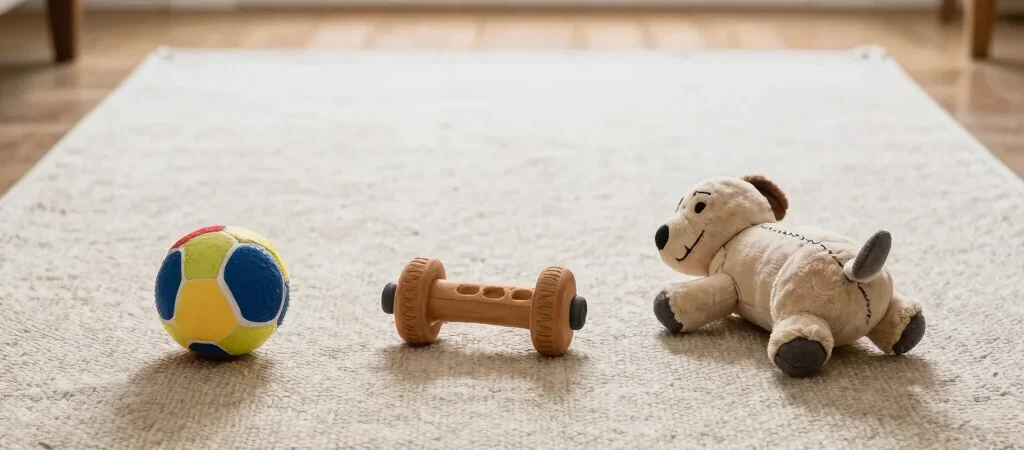
Some dogs carry a plush toy gently; others start pulling at seams before you have put the packaging away. Buying for the way your dog actually plays is more useful than choosing by appearance, especially when you are still learning what your new companion tends to chew, chase, or carry.
Match the Toy to Play
For a dog who enjoys chasing, a ball or fetch toy may be a better fit than a puzzle that needs close attention. A dog who likes to work at a task may do better with an appropriately sized food puzzle, while a comfort-seeking dog may prefer a soft toy during supervised downtime.
Product labels can help narrow the options, but they cannot predict exactly how an individual dog will use a toy. If you are unsure, start with one simple item and watch your dog’s play before buying a set or moving to a more complex design.
Check Size and Condition
Choose a toy that is the right size for your dog, and check the maker’s sizing guidance rather than guessing from a photo. Look over seams, attached pieces, and surfaces for damage, and take the toy away if it becomes worn or starts coming apart.
For a new dog, supervise play until you know how the toy holds up and how your dog handles it. A toy should not be treated as a substitute for supervision, and no material or design is a guarantee against chewing damage or swallowing pieces.
Keep Enrichment Simple
You do not need a crowded toy basket to give a dog useful variety. Rotate a few appropriate toys, keep food puzzles manageable at first, and follow the product’s cleaning instructions so the setup stays easy to maintain.
Tinyfurco may earn a commission when readers purchase through affiliate links in this article, at no added cost to them. Check the toy’s size guidance and care instructions, then introduce it during supervised play; your dog’s response is the best clue about whether it belongs in the rotation.
Products not fetched from DB and/or API. Please check debug logs.